🎁 FIRST ORDER OFFER: GET 10% OFF | USE CODE DNRFIRST10 AT CHECKOUT 🌿

Is PCOS Now Called PMOS? Understanding the New Approach to Women’s Health
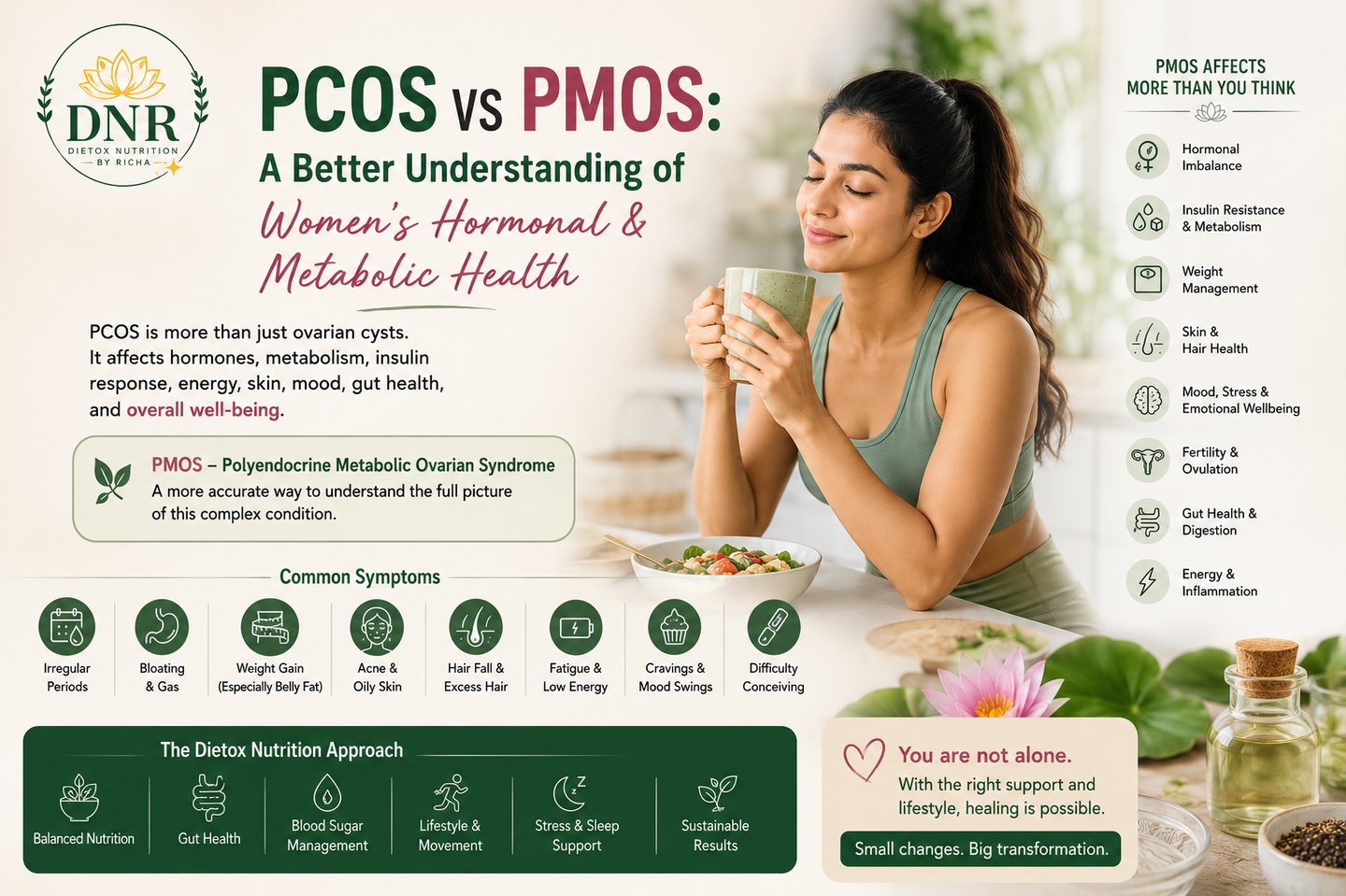
Some health experts are now using the term PMOS (Polyendocrine Metabolic Ovarian Syndrome) to better reflect the broader metabolic and hormonal impact commonly associated with PCOS.
WOMEN’S HORMONAL HEALTH
Dietox Nutrition Team
5/26/20264 min read
PMOS: A New Name, A Better Understanding of Women’s Health
For years, millions of women across the world have struggled with symptoms like irregular periods, stubborn weight gain, acne, hair fall, infertility, mood swings, and hormonal imbalance — often without clear answers or proper support.
Most of them were eventually diagnosed with PCOS.
But now, the conversation around this condition is evolving in a powerful way.
PCOS is Now Being Referred to as PMOS
The condition widely known as PCOS (Polycystic Ovary Syndrome) is now increasingly being recognised as PMOS — Polyendocrine Metabolic Ovarian Syndrome.
And honestly, this shift makes much more sense.
Why? Because the old name never fully explained what women were truly experiencing.
Why the Name PCOS Was Misleading
Despite the term “polycystic ovaries,” many women diagnosed with PCOS never actually had ovarian cysts.
At the same time, many women with ovarian cysts did not have PCOS.
This created years of confusion, delayed diagnosis, and frustration.
The name focused mainly on the ovaries, while the condition itself affects the entire body — especially hormones, metabolism, insulin response, mental health, skin, fertility, and inflammation.
That’s where the new term PMOS feels more accurate and inclusive.
PMOS Is More Than Just a Reproductive Disorder
PMOS is a complex hormonal and metabolic condition that can affect multiple systems in the body.
It may impact:
Hormonal balance
Insulin resistance and metabolism
Weight management
Ovulation and fertility
Skin and hair health
Mood, anxiety, and emotional wellbeing
Energy levels and inflammation
This is exactly why many women with PMOS often say: “I knew something felt wrong, but nobody could explain the full picture.”
Why This Change Matters
A medical name may seem like a small thing, but terminology shapes awareness, diagnosis, treatment, and even how patients feel about themselves.
The old name often reduced the condition to fertility alone.
In many cultures — especially among Indian women — fertility is deeply linked with identity and social pressure. This led many women to feel judged, anxious, or ashamed after diagnosis.
The term PMOS helps shift the focus toward whole-body health instead of just ovarian appearance.
And that is a huge step forward.
What Causes PMOS?
There is no single cause, but several factors may contribute, including:
Insulin resistance
Chronic inflammation
Genetics
Stress and poor sleep
Sedentary lifestyle
Nutritional deficiencies
Hormonal imbalance
Every woman’s experience is different, which is why personalised care matters so much.
The Dietox Nutrition Approach to PMOS
At Dietox Nutrition, we believe PMOS management should go beyond calorie counting or crash diets.
Healing hormones requires a sustainable, science-backed, and compassionate approach.
Our focus includes:
Balanced nutrition
Blood sugar regulation
Anti-inflammatory foods
Gut health support
Stress management
Sleep and lifestyle correction
Healthy movement and yoga
Long-term habit building
Because PMOS is not just about weight. It’s about restoring balance from within.
Can PMOS Be Managed Naturally?
With the right lifestyle support, many women notice significant improvement in:
Period regularity
Weight management
Acne and hair fall
Energy levels
Cravings and bloating
Fertility outcomes
Confidence and emotional wellbeing
Nutrition, movement, stress reduction, and consistency can make a remarkable difference.
Final Thoughts
The shift from PCOS to PMOS represents more than just a new medical term.
It reflects a deeper understanding of women’s health — one that recognises this condition as a full-body hormonal and metabolic disorder rather than just an ovarian issue.
For millions of women who have felt unheard, confused, or dismissed, this change brings validation, awareness, and hope.
And at Dietox Nutrition, we are here to support women through every step of that journey — with evidence-based nutrition, holistic wellness, and personalised care designed for real life.
FAQs
Is PCOS now called PMOS?
Some health experts are increasingly using the term PMOS to better describe the broader hormonal and metabolic nature commonly associated with PCOS. However, PCOS is still the most widely recognized medical term.What is the difference between PCOS and PMOS?
PCOS mainly refers to Polycystic Ovary Syndrome, while PMOS is a newer term some experts use to highlight the metabolic, hormonal, and whole-body impact associated with the condition.Why are people calling PCOS as PMOS now?
Many experts believe the term PCOS focuses too much on ovarian cysts, while the condition often affects metabolism, hormones, insulin resistance, gut health, energy levels, skin, and emotional wellbeing.Is PMOS an officially accepted medical term?
PCOS remains the most commonly used medical diagnosis worldwide. PMOS is an emerging concept used in some wellness and healthcare discussions to better explain the broader nature of the condition.Can you have PCOS without ovarian cysts?
Yes. Many women diagnosed with PCOS may not have ovarian cysts visible on scans. Symptoms and diagnosis are often linked to hormonal imbalance, irregular periods, insulin resistance, and metabolic health.Why is the name PCOS considered confusing?
The term “Polycystic Ovary Syndrome” can be misleading because not every woman with PCOS has cysts, and not every woman with ovarian cysts has PCOS.Is PCOS only related to fertility problems?
No. PCOS may also affect:Weight management
Insulin resistance
Skin health
Mood and anxiety
Hair fall
Digestion
Energy levels
Hormonal balance
Does PCOS affect the whole body?
Yes. PCOS is often linked with hormonal, metabolic, and lifestyle-related factors that may impact multiple systems in the body.What are the most common symptoms of PCOS or PMOS?
Common symptoms may include:Irregular periods
Weight gain
Acne
Hair fall
Facial hair growth
Fatigue
Mood swings
Bloating
Difficulty losing weight
Can lifestyle changes help manage PCOS naturally?
Healthy lifestyle habits such as balanced nutrition, movement, stress management, sleep support, and gut health care may help improve overall wellness and symptom management.Why do women with PCOS struggle with weight loss?
Hormonal imbalance, insulin resistance, inflammation, cravings, poor sleep, and stress may all contribute to difficulty managing weight in PCOS.Does insulin resistance cause PCOS symptoms?
Insulin resistance is commonly associated with PCOS and may contribute to weight gain, cravings, hormonal imbalance, and metabolic issues.Can gut health affect PCOS symptoms?
Gut health may influence inflammation, digestion, hormones, metabolism, and overall wellness, which can impact PCOS symptom management.Which diet is best for PCOS weight management?
Balanced nutrition focusing on:Protein-rich meals
Fiber-rich foods
Blood sugar balance
Healthy fats
Reduced processed foods
may help support healthy lifestyle management in PCOS.
Why is awareness about PMOS growing?
Awareness is increasing because many women and experts feel the condition involves much more than ovarian cysts and deserves a more holistic understanding.Can stress worsen PCOS symptoms?
Chronic stress and poor sleep may affect hormones, cravings, metabolism, and emotional wellbeing, which can influence PCOS symptoms.Is PCOS a hormonal problem or metabolic disorder?
PCOS is often considered both a hormonal and metabolic condition because it may affect insulin response, hormones, inflammation, weight management, and reproductive health.Can women with PCOS live a healthy normal life?
Yes. With proper nutrition, lifestyle support, movement, stress management, and consistency, many women successfully manage symptoms and improve overall wellness.Why is personalized nutrition important for PCOS?
Every woman experiences PCOS differently. Personalized nutrition helps create realistic and sustainable wellness support based on lifestyle, symptoms, and health goals.What is the best natural approach for PCOS management?
Many women focus on:Balanced nutrition
Better sleep
Daily movement
Stress reduction
Gut health support
Sustainable lifestyle habits for long-term wellness support.

+91 - 9319357457,
info@dietoxnutrition.com
© 2026 Dietox Nutrition by Richa. All rights reserved.
Quick Links
Wellness
Location
Contact Us
Powered by Spacelinkers Infotech
Weight Management
Gut Health & Digestion
Skin & Beauty
Energy & Hydration
Immunity Boost
Shop No.6, First Floor, Baldev Road, Tundla, Firozabad, Uttar Pradesh, 283204